

33 episoder
S3E8: Unwanted Truth – John Okada and the Book That Wouldn't Stay Silent
10.09.2026 | 43 min.Send us Fan Mail
When John Okada published No-No Boy in 1957, it was met by the Japanese American community with silence, discomfort, and outright rejection. Okada passed away in 1971 believing his novel was a failure, unaware that it would later be rediscovered and hailed as a foundational classic of Asian American literature.
In this episode, Koji and Michelle are joined by author, filmmaker, and historian Frank Abe—author of the biography John Okada: The Life and Rediscovered Work of the Author of No-No Boy and director of the PBS documentary Conscience and the Constitution. Frank shares what it was like to accidentally become the cover model for the iconic 1976 CARP edition, how Okada drew inspiration from real-life draft resister Jim Akutsu, the critical historical differences between "No-No Boys" and draft resisters, and the tragic story behind Okada’s lost second novel. Plus, Frank discusses his current work adapting No-No Boy for the stage at the Seattle Repertory Theatre, followed by reflections on community trauma, healing, and post-war identity.
About Frank Abe
Frank Abe is a Sansei author, filmmaker, and journalist who has spent decades unearthing and preserving essential stories of Japanese American resistance and literary history. He wrote and directed the landmark PBS documentary Conscience and the Constitution, which chronicles the organized draft resistance at the Heart Mountain concentration camp.
Abe is the co-editor of the anthology John Okada: The Life and Rediscovered Work of the Author of No-No Boy (University of Washington Press) and The Literature of Japanese American Incarceration (Penguin Classics), as well as co-author of the graphic novel We Hereby Refuse: Japanese American Resistance to Wartime Incarceration. An early member of the Asian American Theater Workshop and collaborator with CARP (Combined Asian American Resources Project) in San Francisco, Abe famously served as the cover model for the groundbreaking 1976 republication of No-No Boy. He is currently developing a 21st-century stage adaptation of No-No Boy in collaboration with the Seattle Repertory Theatre.
To learn more about Frank’s background, browse his published books, and screen his documentary work, visit resisters.com/frank-abe-bio.
Follow & Support Us
Enjoyed the episode! Don't forget to rate, review, and tell a friend!
CREDITS
The music was created by Jalen Blank
Written by Koji Steven Sakai
Hosts: Michelle Malazaki and Koji Steven Sakai
Edited by Koji Steven Sakai
Produced by Koji Steven Sakai in conjunction with the Japanese American National Museum
Support the showS3E7: Kidnapped from Peru – The Naganuma Story & the Fight for JLA Redress
13.08.2026 | 28 min.Send us Fan Mail
Welcome back to Japanese America! In Season 3, Episode 7, we step directly into one of the most monumental, legally complex, and deeply emotional chapters in our community’s history: the fight for Japanese American Redress.
While most people think of Redress in terms of the landmark Civil Liberties Act of 1988 and the 120,000 Japanese Americans forced into domestic concentration camps, there is a massive parallel story of international kidnapping and legal limbo that took decades to bring to light. In this episode, we explore the extraordinary narrative of Japanese Latin American (JLA) deportees.
Through the rare, deeply personal oral histories of the three Naganuma Brothers—Jimmy, George Kazuharu, and Kazumu Julio Cesar—we trace a family’s journey from a thriving life in Callao, Peru, to being abducted by the U.S. military, fumigated with DDT upon arrival in New Orleans, and incarcerated at the Department of Justice internment camp in Crystal City, Texas.
We examine their multi-decade battle for basic legal status after being classified as "illegal entrants," and highlight the fierce advocacy of their sister Kiyo, whose bold confrontation with U.S. officials made her siblings some of the few Japanese Peruvians to receive the full $20,000 Redress settlement. Koji also shares his own personal connection to Crystal City, where his family was incarcerated after his grandfather gave up his citizenship, illustrating the diverse and irony-filled nature of that camp
Links & Resources Mentioned
Discover Nikkei & Densho Partnership: Listen to the full oral histories and read the complete transcripts for Jimmy Naganuma (https://ddr.densho.org/narrators/927/), George Naganuma (https://ddr.densho.org/narrators/928/), and Kazumu Julio Cesar Naganuma (https://ddr.densho.org/narrators/927/)
Learn More: Visit the Japanese American National Museum (JANM.org) for exhibitions, history, and community resources.
Follow & Support Us
Enjoyed the episode? Don't forget to rate, review, and tell a friend!
Credits
The music was created by Jalen Blank
Written by Koji Steven Sakai
Hosts: Michelle Malazaki and Koji Steven Sakai
Edited by Koji Steven Sakai
Produced by Koji Steven Sakai in conjunction with the Japanese American National Museum
Support the showS3E6: In the Dust Behind Barbed Wire — The Rhythm of FandangObon
09.07.2026 | 21 min.Send us Fan Mail
Welcome back to Japanese America! In our annual July Obon Special, we explore how the traditional summer dance circle has expanded into a massive, multi-ethnic movement of resistance, collective healing, and cross-cultural solidarity.
In this episode, we feature powerful clips from the new documentary Nobuko Miyamoto: A Song in Movement—a brilliant co-production between the Japanese American National Museum (JANM) and PBS. We trace the incredible journey of how an early 1980s request for the first English-language Obon song evolved into FandangObon: an iconic Los Angeles festival fusing Japanese Obon, Mexican Fandango, and West African drum traditions.
Along the way, Michelle shares her nostalgic memories of childhood Obon festivals in Japan (complete with a loophole for bad manners), while Koji stands firm on his lifelong stance that "gangsters don't dance"—unless, of course, a childhood crush was involved. We also dive into what our ancestors might think of Koji's legendary Minor League baseball dance moves.
What We Discuss in This Episode:
The First English Obon Song: How Reverend Masao Kodani of Senshin Buddhist Temple challenged icon Nobuko Miyamoto to bridge a cultural gap in the early 1980s.
Obon as Resistance: A poignant look at how Japanese Americans kept the Obon tradition alive behind barbed wire in WWII concentration camps, dancing in the camp dust as an act of survival.
The Birth of FandangObon: The magical moment Nobuko stepped into a Mexican Fandango workshop, recognized the shared community structure of the participatory circle, and fused it with Obon.
LA Cultural Synthesis: Artists Quetzal Flores and Martha Gonzalez reflect on what it means to find collective healing, beauty, and joy through intergenerational solidarity.
Cultural Nuances & "The Rules": Michelle and Koji discuss the differences between Japanese and American street manners, the multi-layered nature of Japanese spirituality (Shinto shrines, Christmas, and Buddhist funerals), and sharing cross-cultural clothing like yukata and happi coats with respect.
The Ultimate Dance-Off: Michelle challenges Koji's rhythm, prompting Koji to defend his skills using Minor League classics like "The Chicken Dance," "The Bus Driver," and "The Q-Tip".
Featured Voices & Film Credits
Nobuko Miyamoto: Legendary activist, musician, dancer, and founder of Great Leap.
Reverend Masao Kodani: Former head minister of Senshin Buddhist Temple.
Quetzal Flores & Martha Gonzalez: Grammy Award-winning musicians and pillars of the LA Fandango/Son Jarocho movement.
The Film: Audio clips featured in this episode are pulled directly from Nobuko Miyamoto: A Song in Movement, a co-production by the Japanese American National Museum (JANM) and PBS.
Links & Resources Mentioned
Watch the Movie: Stream the full documentary right now on PBS: Nobuko Miyamoto: A Song in Movement on PBS. (https://www.pbs.org/video/nobuko-miyamoto-a-song-in-movement-gjvy7f/)
Learn More: Visit the Japanese American National Museum for exhibitions, history, and community resources. (www.janm.org)
Follow & Support Us
Enjoyed the episode? Grab your uchiwa fan, head to your local temple, and step into the circle this summer! Don't forget to rate, review, and subscribe!
Support the showSeason 3, Episode 5 (Special Uncut): Kouraku and the Taste of Home — Special Japanese Interview with Mamoru Tokuda-san (シーズン3・第5話 特別編: 後楽、故郷の味)
12.06.2026 | 16 min.Send us Fan Mail
This is the special, uncut companion episode to our main June 2026 feature on Kouraku, officially certified by the City of Los Angeles as America's oldest operating ramen shop. While our main episode features English translations, we wanted to share our entire raw, heartwarming conversation exactly as it happened on Second Street in Little Tokyo.
Listen in as host Michelle Malizaki sits down with Kouraku's owner, Mamoru Tokuda-san, speaking entirely in Japanese. Mamoru-san shares his personal journey from volunteering during the uncertainty of the 2020 pandemic to stepping up to preserve a 50-year-old culinary legacy after the tragic passing of the previous owner, Hiroshi Yamauchi. He also discusses the unique philosophy of Showa-era machi-chuka (Japanese-Chinese comfort food), the warmth of seeing four generations of customers return to the same tables, and how a high-tech cat delivery robot named Luna-chan found a permanent home alongside an irreplaceable piece of Little Tokyo history.
エピソード解説 (Japanese): ロサンゼルス市より「現存するアメリカ最古のラーメン店」として正式にストリートサインを授与された、リトルトーキョーの老舗「後楽(Kouraku)」。今回の配信は、新オーナーの徳田守( Mamoru Tokuda)さんをお迎えしたインタビューの模様を、編集なしのオリジナル日本語音声でお届けする特別編です。
2020年、パンデミックの混乱の中でボランティアとしてお店を手伝い始めたところから、先代の山内弘さんの急逝、そして2023年1月に伝統の暖簾を引き継ぐに至った経緯を徳田さんご自身の言葉で語っていただきました。さらに、専門店とは異なる「町中華(machi-chuka)」ならではの優しいスープの秘密や、35年以上の歴史を持つレトロな看板へのこだわり、そして今やお店のエンターテインメントとして大人気となっている猫型配膳ロボット「ルナちゃん(Luna-chan)」誕生の裏話まで、リトルトーキョーで紡がれる温かい歴史が詰まったインタビューをお楽しみください。
Support the showS3E5: Kouraku and the Taste of Home — Feeding a Community
11.06.2026 | 20 min.Send us Fan Mail
Welcome back to Japanese America! In this episode, hosts Koji Steven Sakai and Michelle Malizaki take the podcast on location to Second Street in the heart of Little Tokyo, Los Angeles, to record inside a true culinary and cultural landmark: Kouraku.
Originally opened in 1976, Kouraku was recently honored by the City of Los Angeles with an official street sign certifying it as America's oldest operating ramen shop. To celebrate this incredible 50-year milestone, Koji and Michelle sit down with the restaurant's new owner, Mamoru Tokuda-san, who stepped in to take over the reins in January 2023.
Mamoru-san shares the deeply moving story of how he transitioned from a restaurant career to volunteering at Kouraku during the height of the COVID-19 pandemic, eventually stepping up to preserve the space after the tragic passing of the previous owner, Hiroshi Yamauchi. We also look at the historical roots of Showa-era machi-chuka (Japanese-Chinese comfort food) and why its gentle, balanced flavors have sustained families across four generations.
Note: For this episode, Koji reads the English translations of the interview so everyone can follow along with the history. However, we will also be releasing a separate, uncut companion episode featuring Mamoru-san's interview entirely in his own words in Japanese.
In this episode, we discuss:
The Magic of Showa-Era Nostalgia: Michelle explains why old-school Showa-era aesthetic is suddenly "cool" again and how Kouraku’s vintage vibe instantly transports her back to her childhood in Japan.
Preserving a 50-Year Legacy: How Mamoru-san balanced the pressure of taking over a historic business with the inspiration he drew from Kouraku's long-term staff—many of whom have dedicated 20 to 30 years to the kitchen.
The Science of Machi-Chuka Flavors: The culinary reason Kouraku’s stock is kept balanced and gentle, utilizing a chashu-infused soy sauce base rather than the overwhelming flavors of modern specialty shops.
High-Tech Meets History: The introduction of Luna-chan, Kouraku's famous cat-themed delivery robot, and how it coexists with an irreplaceable, historic 1980s neon signboard that modern makers can no longer replicate.
Food as a Cultural Time Machine: Koji and Michelle share their ultimate childhood comfort foods. Michelle reflects on making homemade gyoza with her mother, while Koji opens up about his lifelong obsession with curry rice, sharing a poignant memory of how his father's experiences in the WWII incarceration camps shaped his relationship with the dish.
Links & Resources Mentioned:
Visit the Restaurant: Kouraku, Little Tokyo (Los Angeles, CA)
Learn more about Japanese American history: janm.org
Support the show
Flere Historie podcasts
Trendige Historie podcasts
Om Japanese America
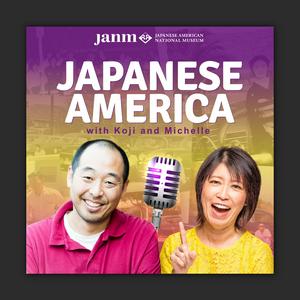
Welcome to "Japanese America," where the Japanese American National Museum unveils captivating stories that add a Nikkei slant to the American narrative. In each episode, we explore the unique experiences, challenges, and triumphs of Japanese Americans, illuminating their rich contributions to the mosaic of American life. From historical milestones to contemporary perspectives, join us for an insightful journey through the curated collection of the Japanese American National Museum, showcasing the diverse tapestry of a community that has shaped the American story in extraordinary ways. Welcome to "Japanese America," where each story unfolds like a chapter in a living history book.
Podcast-webstedLyt til Japanese America, The Rest Is History og mange andre podcasts fra hele verden med radio.dk-appen
Hent den gratis radio.dk-app
- Bogmærke stationer og podcasts
- Stream via Wi-Fi eller Bluetooth
- Understøtter Carplay & Android Auto
- Mange andre app-funktioner
Hent den gratis radio.dk-app
- Bogmærke stationer og podcasts
- Stream via Wi-Fi eller Bluetooth
- Understøtter Carplay & Android Auto
- Mange andre app-funktioner

Japanese America
Scan koden,
download appen,
begynd at lytte.
download appen,
begynd at lytte.
 Denmark