

113 episoder
John Scofield
01.10.2026 | 31 min.Guitarist John Scofield (born December 26, 1951) first rose to prominence as a member of Miles Davis’ band, but he had a number of good credits prior to the three and a half years he spent with Davis, including stints with Chet Baker, Hal Galper, Charles Mingus, Billy Cobham, and George Duke. His own groups have featured luminaries such as Steve Swallow, Adam Nussbaum, Bill Stewart, Joe Lovano, and Charlie Haden. He has been nominated for nine Grammy awards and won three.
Help support the Jazz Legends podcastJim Hall
23.09.2026 | 27 min.Guitarist/composer Jim Hall (born December 4, 1940) is one of the most influential exponents of his instrument. His recordings with Bill Evans, Sonny Rollins, Paul Desmond, and many others, in addition to his recordings as a leader, have influenced whole generations of guitarists. His tasteful, spare style has been emulated but never duplicated. He recorded 39 studio albums and 10 live albums as a leader.
Help sponsor St. Michael's Jazz Fest
Donate to the Jazz Legends podcast
Contact us at stmichaelsjazzfest@gmail.comGerry Mulligan (Round 2)
16.09.2026 | 26 min.Saxophonist/composer Gerry Mulligan (born April 6, 1927) is perhaps the best-known baritone saxophonist in jazz. His mastery of this cumbersome instrument is legendary, but he also has recorded as a pianist, on clarinet, and on soprano and tenor saxophone. He is a prolific composer and arranger as well. His Concert Jazz Band in New York City featured many of the city’s finest jazz musicians in a fresh setting. His piano-less quartet featured Chet Baker, and his participation in the Miles Davis “Birth of the Cool” set the pace for countless West Coast jazz musicians.
Help sponsor St. Michael's Jazz Fest
Donate to the Jazz Legends podcast
Contact us at stmichaelsjazzfest@gmail.comTom Harrell (Round 3)
09.09.2026 | 27 min.Trumpeter/composer Tom Harrell (born June 16, 1946) has overcome daunting physical and mental obstacles to become one of the most important musicians of his generation. Heavily medicated to deal with his bipolar disorder, he still maintains a busy performing, recording, and composing schedule. Early in his career he toured with Stan Kenton, Woody Herman, Horace Silver, and Phil Woods. He appears on over 85 recordings, 40 as a leader, and his compositions offer fresh slants on the jazz tradition.The Incomparable Sonny Rollins
02.09.2026 | 36 min.Saxophonist Sonny Rollins (born Sept 7, 1930) is universally considered one of the most creative musicians the music has produced. Throughout his long recording career he produced over 60 albums as a leader, was awarded a lifetime Grammy award and the Kennedy Center award in 2011. A number of his compositions have become jazz standards, including Oleo, St Thomas, Airegin, and Doxy.
Help sponsor St. Michael's Jazz Fest
Donate to the Jazz Legends podcast
Contact us at stmichaelsjazzfest@gmail.com
Flere Musik podcasts
Trendige Musik podcasts
Om Jazz Legends
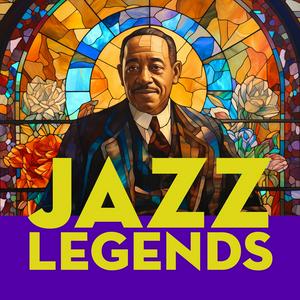
Conversations about the all-time jazz legends from local jazz legends Gunnar Biggs, Keith Bishop, Joey Carano, Leonard Thompson, and Bob Weller. Soak in their stories and expertise as they prep for their Sunday night shows at St. Michael’s-by-the-Sea in Carlsbad, California.
Podcast-webstedLyt til Jazz Legends, Noget Ved Musikken og mange andre podcasts fra hele verden med radio.dk-appen
Hent den gratis radio.dk-app
- Bogmærke stationer og podcasts
- Stream via Wi-Fi eller Bluetooth
- Understøtter Carplay & Android Auto
- Mange andre app-funktioner
Hent den gratis radio.dk-app
- Bogmærke stationer og podcasts
- Stream via Wi-Fi eller Bluetooth
- Understøtter Carplay & Android Auto
- Mange andre app-funktioner

Jazz Legends
Scan koden,
download appen,
begynd at lytte.
download appen,
begynd at lytte.
 Denmark